Angkor What?! Education, Lara Croft, and Prostitution

I’ll start by celebrating the people in my life who are currently living abroad. I am so impressed by the number of adventurous souls in my life who are living outside of their comfort zones, learning about the universe, and sharing their warm spirits. My first night in Phnom Penh, I got to see my friend Dave, with whom I studied at Berkeley. He is doing micro-finance work in Southeast Asia, and is living in Cambodia for at least a year. What a bad-ass.

image

I got to spend most of my time in Cambodia with my friend Dan, who I know through our mutual friend Corie Schneider.  Corie is living on a boat in Australia; Dan is spending eight-months traveling around Asia.  Life ain’t bad.  Dan is a person in my life with whom I can have sincerely profound conversations on privilege, religion, altruism, love … and then share a beer, play pool, and laugh hysterically at something menial.

Dan, Sara, and I took a six-hour bus ride north, from Phnom Penh to Siam Reap, passing wooden huts on stilts, long stretches of dry land dotted with palm trees, and occasional roadside venders, selling pineapple and watermelon. The famous Angkor temples are twenty-minutes outside of Siam Reap. Our first night in town, we braved the “pub district” of the city, all of which is changing rapidly with the spread of tourism.

At one point during our meal, we were approached by a teenage boy wearing a tank-top and a pair of dirty shorts. He was Cambodian, and wanted to sell us a book on the Angkor temples. We politely told him no, thank you. He looked at us, pensive with penetrating black eyes, and asked us where we were from. After we replied, he began naming the most recent presidents, in backward order, and stating sizes and populations of the various states. It was mind-boggling to listen to him recite knowledge that most Americans do not possess. I asked him his name. Tom told us that he loves history and studying, and that he never met his father. There was no ploy or pretense on his end; when we asked him questions about his life, he was genuinely enthusiastic that we cared. We didn’t buy his book. He told us that he wished he could stay to talk with us, but he has to try to get his books sold. He only goes out on the street to work on nights that he does not have homework.

It got me thinking about the extent to which education systems in impoverished countries perpetuate the cycle by teaching children how to beg. Someone taught Tom the information he knew for the clear purpose of impressing sympathetic, American tourists. Tom could have been learning science, or math, or Cambodian literature … instead, he was learning that Reagan came before Bush, and that Texas is the second largest state.

I’d like to study this further.

We had one full day in Siam Reap/Angkor and we planned on using it fully. Dan, Sara, and I arose at five AM to the sound of Sara’s alarm playing “Teach Me How to Dougie.” We hopped into a tuk-tuk driven by a man named Lee, a shy Cambodian man who agreed to drive us around the temples all day for twenty bucks. Dan snuck away before Lee arrived to get us coffee at a local gas station. What a hero.

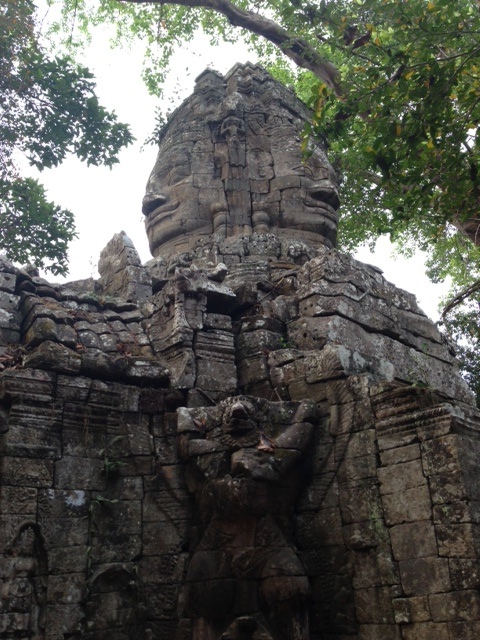
Being at Ta Prohm for sunrise was breathtaking. Most people go to Angkor Wat to get a sunrise shot, and all alone at Ta Prohm, we felt like we were discovering the temple for the first time since the Khmer Empire’s reign. We climbed on ancient heads from a thousand years ago, breathed, and prayed in front of the innumerable Buddhas that speckle each temple.

image

image

image

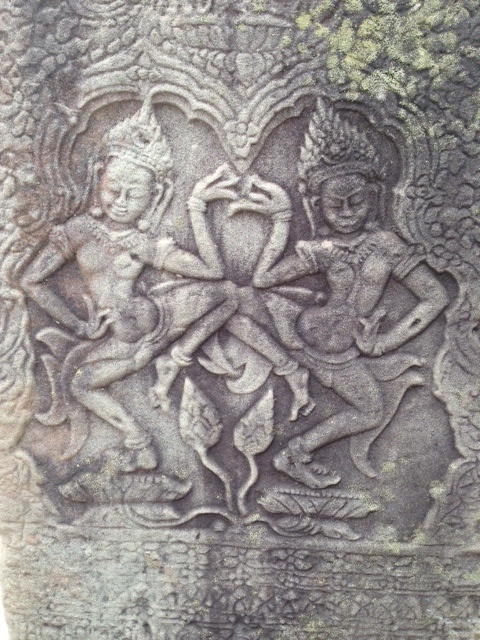
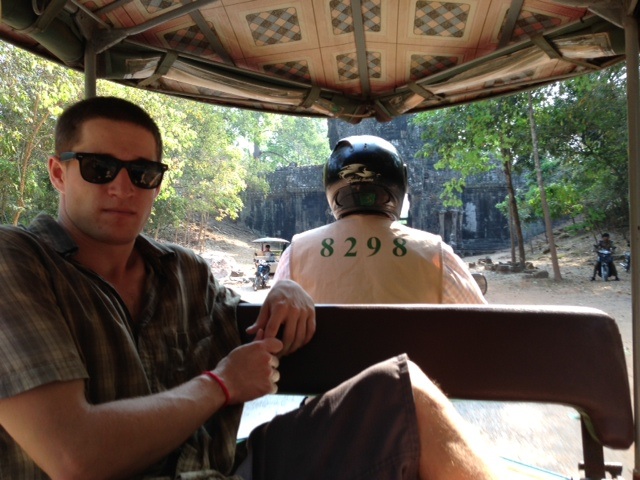
After visiting Bayon temple along with a plethora of Chinese tourists, we drove outside of the main Angkor area to visit Banteay Srey, one of the more secluded ruins. We drove through local communities, playing a game in which we had to be the first to spot a naked baby, a pig, or a dog sleeping somewhere other than the ground. We must have looked strange, screaming, “NAKED BABY!” from our tuk-tuk and pointing enthusiastically. The temple was crowded with Cambodians attempting to sell bagged pineapple, books, and baggy pants to tourists, most of whom were too hot to be friendly. We left quickly, after appreciating the intricate designs on the temple walls.
image

On the way back, we asked Lee to stop somewhere where we could get noodle soup. He pulled over at a restaurant with five-dollar noodle soup, way out of our price range. We walked a few meters to a restaurant with a less impressive facade, passing women selling chicken, ragged-looking dogs sleeping, and rice being cooked on giant vats on the cement floor. We wanted to buy Lee some soup, but he was vehement against coming and eating with us. He didn’t speak any English, and I think we made him nervous.

After lunch it was to the finale: Angkor Wat.
image

Outside of Angkor Wat, we were greeted by a macaque monkey in a tree.

image

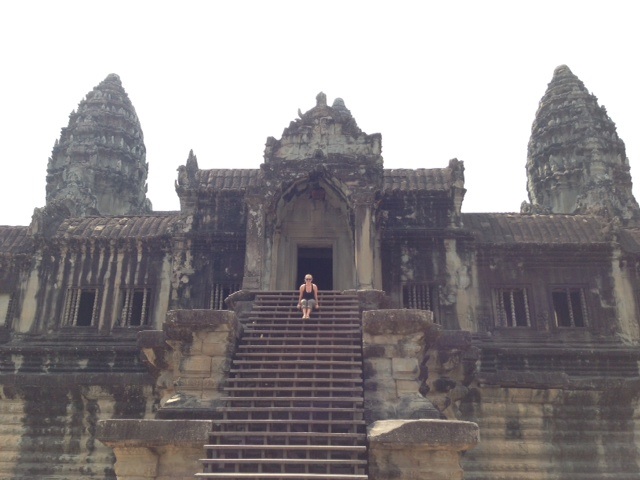
Angkor Wat was the center of the Khmer empire in the 12th century. The Khmer Empire spread over most of the Southeast Asia until it fell to either the plague or water shortages (due to canal infrastructure not being able to sustain the rapidly growing population). It possesses a unique mix of Buddhist and Hindu archaeology, having been a temple utilized by practicers of both religions during the last nine centuries. We spent our time at the temple resting against ancient stone walls, posing like the smiling, stone Buddhas surrounding us, and taking endless pictures.

We got back to Siam Reap filthy and exhausted. After sneaking into the pool of a resort (some things never change), we attempted to fall asleep at our hostel, which had no electricity or water pressure. Intense.

The next night, after traveling back to Phnom Penh, Dan and I went out to play a few games of pool. As Dan and I are wont to do, we stayed out much later than we had planned. At one point of the evening, walking down a dark street hiding ex-pats and young, Cambodian prostitutes, Dan looked at me and said, “Want to get weird?” He nodded toward a group of young Cambodian women outside of a pool hall. Next thing we knew, we were playing pool with two of them in a dark, empty bar. Although at first, they both thought that I was a lesbian and that Dan and I were interested (trying to distract me by posing suggestively over my shots), they quickly realized that we were there to play pool and talk with them. I asked Ain, the most beautiful of the women, if she was happy. With Dan’s help, we successfully conveyed what people might consider happiness. She said that most of the time she is, largely because she lives with her family. There was so much more to her story.

That night, before going dancing at a smoky club playing electronica, I was dumbfounded at the number of Cambodian prostitutes on the street, eating food in groups of three or four, staring pointedly at the white men passing them slowly, surveying. The women were beautiful, and the men, well, the men seemed to be acting on grimy, base emotions that they can only follow on the concealed streets of Cambodia.
Three Nights in Bangkok

Written on February 27th:

When we got on the night bus to Bangkok, we knew we were in for a seven hour bus ride, arriving at four in the morning in a city known for its corruption and grime. After having spent a few days in Bangkok, I can honestly say that if I were a Thai person living in Bangkok, the movie “The Hangover Part Two” would have infuriated me. While there is a party element to the city, which Sara and I definitely enjoyed, Bangkok is also a city of parks, colorful markets, rivers, temples, and kindness.

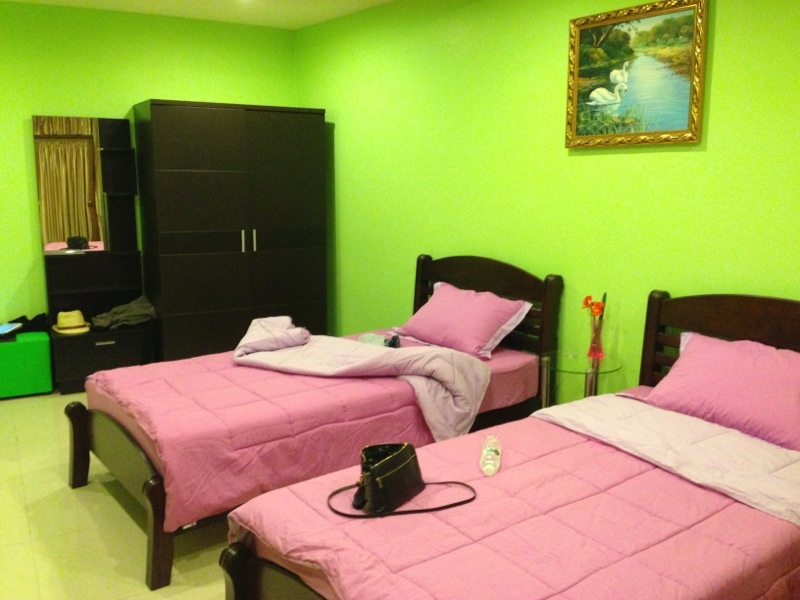
Sara and I got off of the bus in the dark hours of the early morning and hopped into a waiting tuk-tuk, which resembled a vulture waiting to pounce on desperate travelers. While we thought our guesthouse – Penang Palace – was in a central part of the city, it was two tuk-tuks, one cab ride, and several moments of heated haggling and sheer confusion later that we found our refuge.

image

Penang Palace was in an area of town with absolutely no other white people. Anywhere. Sara and I had a blast, surprising people at the local market, grinning from the raised walkways that line the streets, attempting to successfully mail a package from the local post office.

image

Our first day in town, we hopped on the very modern MRT underground system and headed for the famous Chatuchuck weekend market. After buying copious amounts of street food and shamelessly devouring it in a park, we got lost in a sea of indoor and outdoor stalls, sweating profusely, haggling with vendors for stylish new shirts, marveling at the open attitude toward homosexuality and cross-dressing in the city.

image

image

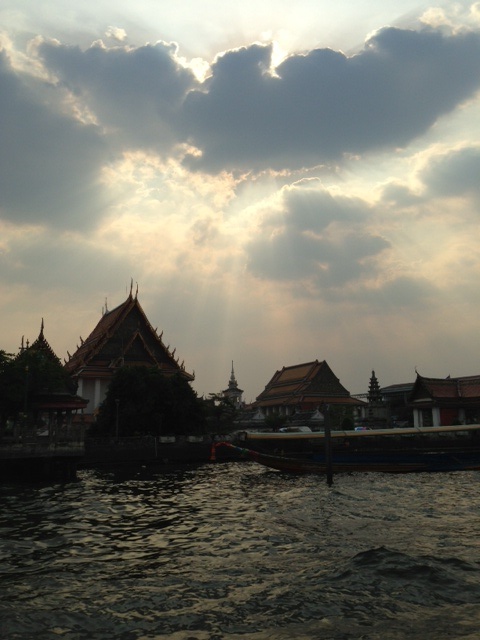
We decided to book a six-hour bike tour of the city, hoping to use our time wisely and have someone else make the difficult decision of what is important to see. We loved our bike ride, which took us through Chinatown and the Historic City, through flower markets, across tiny canals, and on a river ferry. We still have no idea what monuments and temples we saw, although we took plenty of pictures. Friendship Temple, where we rang a series of bells and made wishes, was illuminated by the sun setting behind it.

image

image

The most striking part of the bike tour was the friendliness of the people we passed. We clumsily rode through alleyways and markets, waving to gracious, smiling Thai people the entire way. Thailand: Land of Smiles.

image

Back to the beginning for a moment: On our bus from Chiang Mai to Bangkok, we happened to sit next to two men – who looked to be about our age – who ended up being one of the highlights of our time in Bangkok. Martijn and Tom, both from the Netherlands, were kind, curious, and brilliant. Martijn is a psychologist in a prison in Holland, while Tom is a freelance journalist and a personal trainer. Before Tom told me he was a journalist, I knew there was something unique about him. Interacting with him, I realized that I was answering as many questions as I was asking. This shouldn’t be a rarity in my life, but it was rejuvenating to feel like my story was valuable and appreciated. He said the same thing about interacting with me; normally, he feels like he provides the interest in most conversations, allowing people to share their experiences, without necessarily inviting him to do the same. People interested in journalism must share personality traits; on the bus, he brought up the book that I had just finished in Luang Prabang, South of the Border, West of the Sun. Serendipity in action!

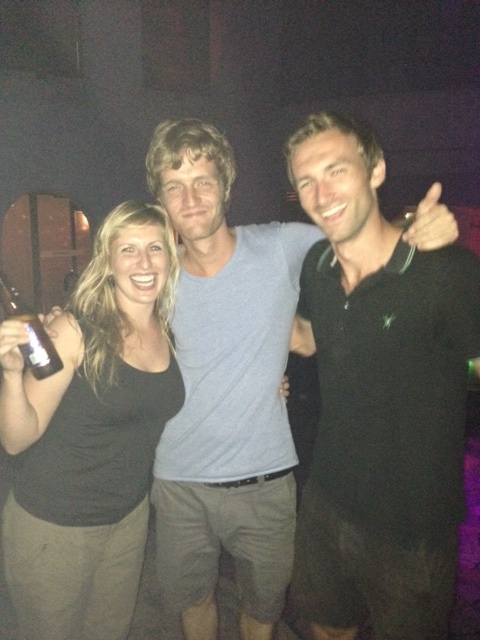
The four of us spent a night on Khao San Road, the spot for nightclubs in Bangkok, playing pool, dancing, and laughing at the sheer number of lady boys who approached us. Tom bought me a cricket to eat, but only because we both thought that the scorpions were too expensive. It had so much salt, it could have passed for a potato chip. Except the legs. The legs threw me off. By three AM, after dancing at an aptly named locale called “The Club,” I realized that my cheeks were sore from laughing so much. That’s how life should be.

image

As Sara and I left for Cambodia, Martijn was off to India and Tom was returning to the Netherlands. Maybe we will see them again. If not, Sara and I are tremendously thankful for the reminder of the kind of thoughtfulness, sincerity, and adventure that is out there.

Elephant Smiles

Written on February 25th:

After the iPad adventure, I arrived in Chiang Mai – with means “elephant smile” – with an open mind and an open heart. Too much connection to home definitely makes it more challenging to live in the present, so I read the signs and decided to make a conscious effort to breathe into each moment a little bit more.

Sara and I had several things we knew we wanted to do in Chiang Mai: Thai massage, something with elephants, and a cooking class. The Thai massage that I got, an hour-long celestial experience in which I was an active participant – twisting, turning, and breathing – helped me decide to become certified in Thai massage when I am staying along the southern beaches next week. It is a wonderful intimate experience to give to someone. Oh yeah, and my massage cost four dollars.

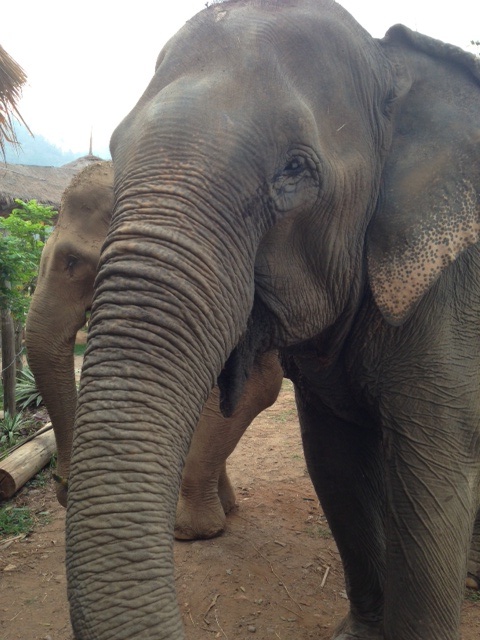
Before arriving in Chiang Mai, I knew I had a problem with the numerous companies that offer elephant rides. Thailand, known for its working elephants when logging was still permitted in the country, now has serious problems with animal abuse. Elephants are paraded around dirty streets, serving as beggars, and are blatantly mistreated in shows designed to entertain tourists. Sara and I found an organization called Elephant Nature Park, housed on a huge plot of lush, green land outside of the city. The organization is dedicated to helping rehabilitate injured elephants, and providing visitors an opportunity to care for the elephants without riding them. Elephants are now contending with giraffes to be my favorite animal. They are remarkably graceful, calm, and loving beings.

image

The elephant that Sara and I washed, Mae, had a sad story associated with her injury. Her right hip and leg were broken when she was working in a Thai circus. Her owners thought it would be a great idea to breed the two elephants they had, without any knowledge for how this is done, and in the process of the forced breeding, her hip was broken.

image

We took good care of her, spoiling her with a portion of her fifty-pound a day diet of bananas and watermelon.

image

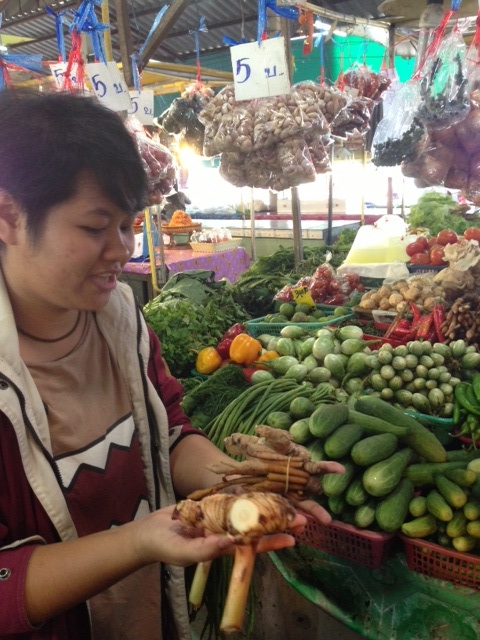
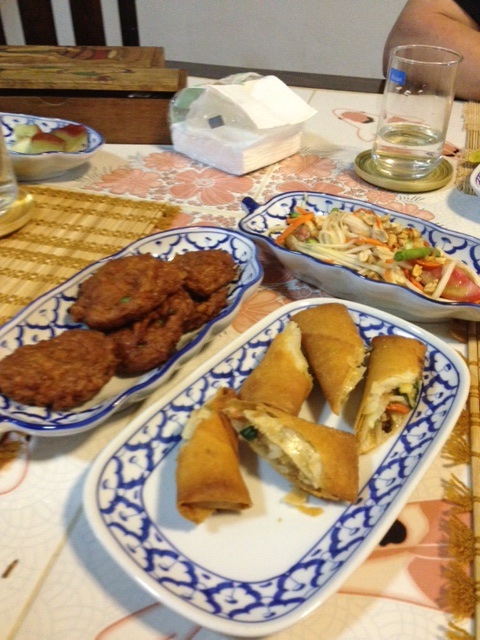
One of the reasons that I am excited to return home is to share the newfound knowledge of Thai cuisine that I picked up in Chiang Mai. Sara and I took a cooking class led by two young Thai women, both of whom were clearly stoned. When they picked us up at our hostel, Sara and I were looking around for the location of the blatant aroma in the car, excited to be with people who like to, well, ya know. After going to a local market to learn about ingredients, we laughed through six courses of stir-frying chicken, crushing chiles, and arranging papaya. Together, we made pad see-ew, fish cakes, hot and sour soup, green curry, mango and sticky rice, spring rolls, and a host of other delicious meals. I think it was the best food we’ve had on the trip so far.

image

image

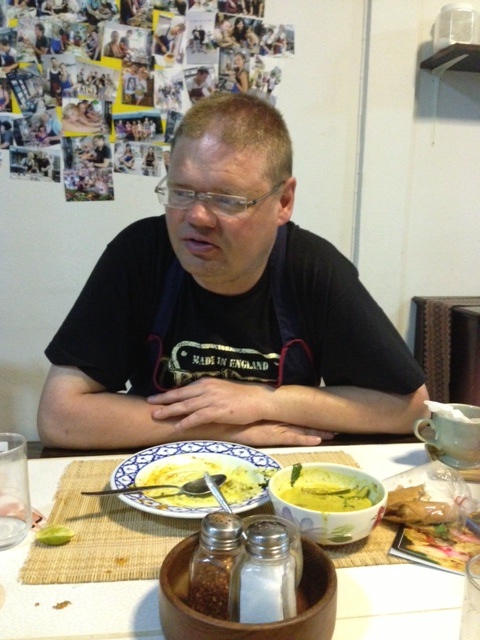
There was one other guy in our cooking class, who I swear looked and spoke exactly like the guy from Office Space.

image

image

Robert and David, our friends from the bus, spent a couple of days with us and are now off to India, where they are planning on “climbing Everest.” People with adventurous spirits are so fantastic. Chiang Mai is likely filled with them; as a beautiful city with temples, delicious food, and friendly people, Chiang Mai attracts conscious, yoga-practicing backpackers brave enough to tackle this area of the world.

image

As for Sara and me, it was onto Bangkok on a night bus. Bangkok rocked our world, and the magic started early on…

Sex and Bribes

Written on February 27th:

When we arrived at the Phnom Penh airport, stepping off of the plane into 36 degree (Celsius) weather, swatting at mosquitos and shielding our eyes from the glaring sun, our first order of business was getting visas. We filled out some standard forms, paid twenty dollars each, and were told to wait by a long desk, behind which sat five, very seriously dressed, Cambodian men. After a few minutes, one of the men called my name and beckoned me to the back portion of their office. He looked at me and said, “Must send you back to your country.”

I laughed. The thought of me getting on a plane to Los Angeles was so far-fetched, so absolutely ludicrous, I honestly don’t think I really took him seriously. “Back to my country?” I said, astonished. “But why?” He flipped through my passport, shaking his head. “Not enough pages for visa. By law, send you back.”

We’ll ignore that I did have one full page left.

Laughing, I said to him, “Well, what should we do?” He looked up and slyly whispered, “You help me, I help you.” I reached into my wallet, pulled out a twenty, and slipped it into my passport. “You like coffee?” I asked. “Here’s one on me. Cool?” More like forty on me. He nodded, all business, stuck a visa in my passport, and I was on my way.

Phnom Penh is the dusty, bustling capital of Cambodia. The literacy rate in Cambodia is 35%. Tuk-tuk drivers haggle with tourists for an extra dollar, barefooted children shyly smile from cement door-frames, golden temples rise between crumbling, gray buildings. Cambodians yell in Khmer to each other, helping with directions for struggling backpackers, or convincing passerby to buy their water, their noodle soup, their amok.

The American dollar is accepted everywhere, and it is possible to buy “happy pizza,” or weed pizza, in some of the more tourist-focused areas of the city. In a country in which the government rules with such an iron fist, a country which such a horrific history, the leniency regarding marijuana surprised me.

Southeast Asia is sensual. While we are having a marvelous time together, I know that Sara and I are each often dreaming of doing this kind of bold, spontaneous traveling with a significant other. We have been fortunate to have met wonderful people on our journey, the universe’s way of reminding us that meaningful and conscious connections are possible all over the world. There is something incredibly sexy in the natural and peaceful aura that falls over so much of this part of the world. I feel very potent here.

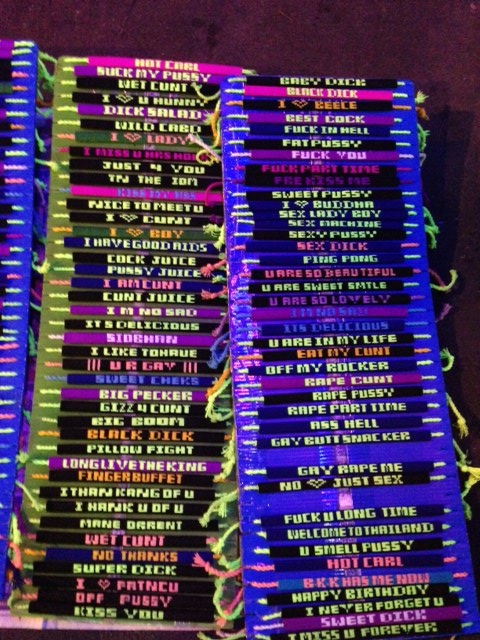
However, there is a dark underbelly in many of the countries we have visited when it comes to sex. In Chiang Mai, young Thai prostitutes slink from bar to bar, awaiting older, white men who are either looking for a night of pleasure or a wife. In Bangkok, “lady boys” solicit male tourists, whining “massaaaage” to anyone who might be interested. As Sara and I walked down one of Bangkok’s main streets, we were asked multiple times if we wanted to see a ping pong show. Look it up on Google. These bracelets were being sold to drunk passerby.

image

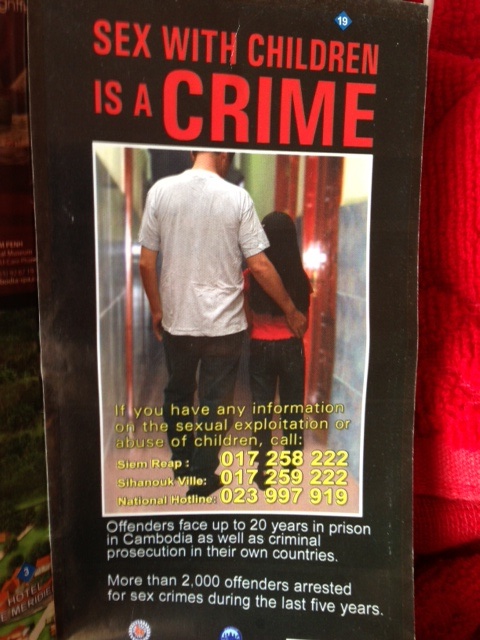
We were greeted in Cambodia with this message on the back of a map.

image

Southeast Asia is beautiful in its simplicity. Its agrarian roots, its Buddhist principles, the tendency of others to smile at me before I smile at them (a sincere treat), should all be embraced and celebrated. Still, in countries in which governments are new and fragile, countries in which human rights abuses are not publicly decried, there is a higher likelihood that people, especially those most vulnerable, will be taken advantage of. I’d like to study the prevalence of sex trade in this area of the world and write about it.

As for the passport, I made a last minute appointment at the American embassy. This morning, I entered the metallic compound and successfully received another 30 pages of possibility.

Laos: A Potentially Explosive Paradise

Laos is many things: an impoverished country ravaged by American bombs and unexploded ordnances, a jungle paradise, and a travel destination for tourists looking to escape the beaten path.

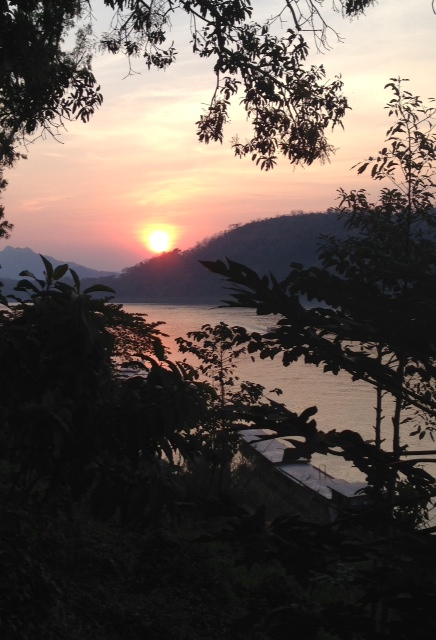
We took a short flight from Hanoi to Luang Prabang, the “cultural capital” of Laos, and one of Laos’ two UNESCO World Heritage Sites. Monks in bright orange robes carry woven baskets and walk in pairs from the market to any one of hundreds of golden temples, or wats. The sun, a shimmering red and purple blaze, sets over the sleepy waters of the Mekong River, on which long, colorful boats await curious tourists.

LP Sunset

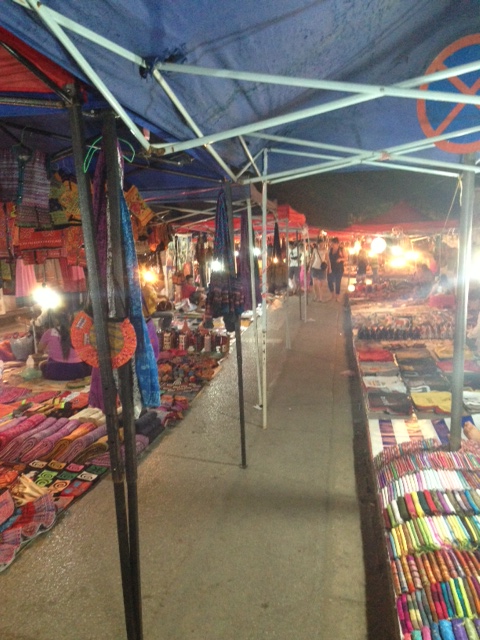
Luang Prabang is home to a fantastic labyrinth of a night market, complete with covered street food vendors and Laotians selling baggy pants, art scrolls, and coffee, among a sea of other things. When we were shopping, dripping sweat underneath red and blue awnings, haggling with every vendor we encountered, it was hard to maintain any sense of direction. This likely contributed to me buying altogether too many gifts.

LP Night Market

Southeast Asia, and Laos in particular, has challenged the relationship I have with my stomach. As per usual, I want to eat everything. Street vendors rarely disappoint. Cumin, chile, coriander, onion, coconut – the medley of flavors and aromas, walking down nearly every street, is intoxicating. Unfortunately, I had my first bout of real sickness in Luang Prabang. As is healthy for any set of travelers, this provided Sara and me the opportunity to spend some time alone. While my beautiful, adventurous friend explored waterfalls, I huddled under a mosquito net in our room, attempting to stomach both the food from the day prior and a strange Japanese novel I was reading, called South of the Border, West of the Sun. I didn’t realize that the protagonist, a middle-aged Japanese man suffering a mid-life crisis, is entirely self-involved until the end of the novel. I suppose one of the themes, in addition to the tendency of people to constantly live in fear of the “what if,” is the essential egotism of humans. The book was powerful and disturbing. But I was thankful that it took my mind away from the delicious and potentially disastrous foods surrounding me.

LP Night Market Foods

On one of our sunny days in Luang Prabang, Sara and I rented bicycles and set off in search of a waterfall. We rode through small Laotian villages outside of town, passing children walking home from school, venders selling watermelon and mango, shining wats with golden Buddhas beckoning, and clothing lines with monk robes hanging to dry.

LP Wat

After riding on a bumpy, unpaved road for a few kilometers, we realized that the waterfall might have to wait for another day. Somewhere off of the jungle-lined path, we discovered an oasis of a spot, which turned out to be a cooking school called Tamarind. I was busy trying to figure out what a Tamarind is, envisioning a kind of monkey that lives in the area. Thinking that maybe we might be able to buy a delicious Laotian iced coffee, we walked through palm fronds and past sleeping dogs to a kitchen, where we met Halan. Halan works at the cooking school, and was positively thrilled that we chose his workplace to rest. He offered us a tamarind. As I was preparing myself to ensure that whatever monkey coming my way did not have rabies, he brought out a rough, brown pod about five inches in length.

Tamarind Guy

It tasted like generosity and prunes.

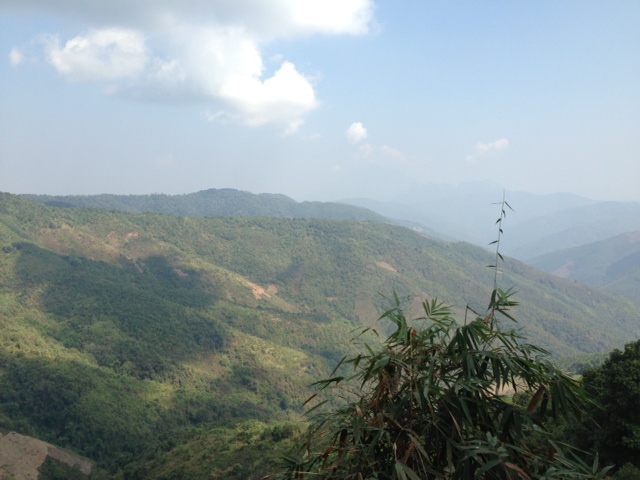
Our next stop in Laos was Phonsavan, a dusty, crumbling town that had an unfinished feel to it. To get there, we crammed ourselves and our luggage into a sweltering minivan with ten other tourists. The minivan climbed jungle-clad mountains, passing groaning buses and resting motorcycle drivers, all the while honking at aloof naked children bathing alongside the road. The drive was picturesque, but demonstrated the immense rural poverty that plagues Laos.

Jungle Bus View

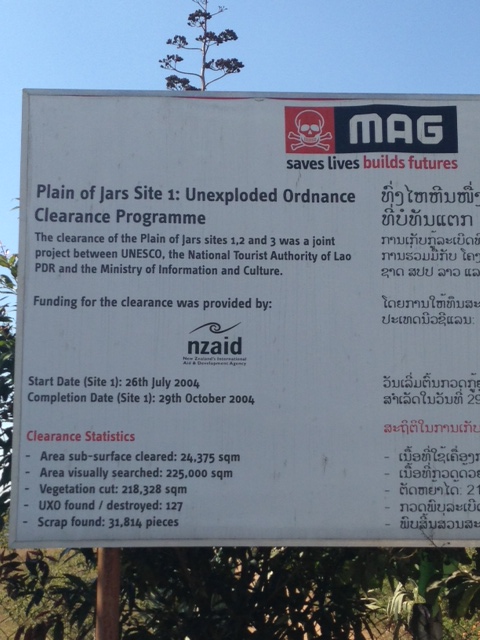
We headed to Phonsavan in order to witness the Plain of Jars, an archaeological phenomenon. Megalithic jars speckle the countryside in Xieng Khouang Province, an area of Laos that is known for its dangerous, potentially explosive fields. Many archaeologists believe the jars are two-thousand-year-old urns, while the Hmong people believe they were used by ancient giants to make rice wine.  Sara and I, creative geniuses that we are, made up our own story complete with a queen, three daughters, and a limerick.  I’ll spare you the details.

Jars

As we viewed the jars, we were instructed to stay between the small, cement markers that line the “safe path,” where Laotians and tourists alike can walk without fear of explosives.

MAG
The night before we explored the area, I went to a local bar to watch a movie titled “The CIA’s Secret War in Laos.” I walked into the bar and mentioned the sign outside advertising the movie to the bartender. He grabbed a DVD case and directed me to a small room in the back, with a black and white TV and a dirt floor. I watched the hour-long movie with an open mind. The director of the movie, and many of its participants, were Americans, all of whom discussed the incredibly detrimental effect Americans have had on the geographic and political landscape of Laos. According to the movie, when Vietnam War pilots could not hit their targets in Vietnam, many dropped their bombs on Laos without questioning the consequences.  As Kennedy and Johnson publicly recognized Laos’ neutrality during the war, fear of communism and the “domino effect” provided American politicians enough impetus to arm the Hmong people to fight the communists within their own country.  The Hmong people, a generation of young men and women, were obliterated.

While we were in Phonsavan, we visited a Hmong village.  I was nervous that it would be similar to the experience I had on Lake Titicaca, when I visited the island of the “native” people, all of whom seemed to present an artificial preservation of culture to please eager tourists. Thankfully, the Hmong village seemed untouched. Sara, our tour guide (Mr. Wong), and I walked around a small village, complete with cows, a monkey, wooden buildings with thatched roofs, and pigeon coops supported by bomb shells. The surreptitious presence of bomb shells, as building supports and flower “boxes,” was disturbing.

Monkey

Hmong Bombs

Poppies are one of the primary sources of income for the villagers, reminding me of the heroin drug addictions suffered by locals and American soldiers alike during the Vietnam War. We were welcomed into the home of So, a young Hmong man who kindly poured us shots of rice wine and practiced his English. As we were sitting around his small hut, on thatched stools, I realized how fortunate Sara and I were to be offered such an opportunity. Graciousness, even among great poverty.

Poppies

So and Hmong Shots

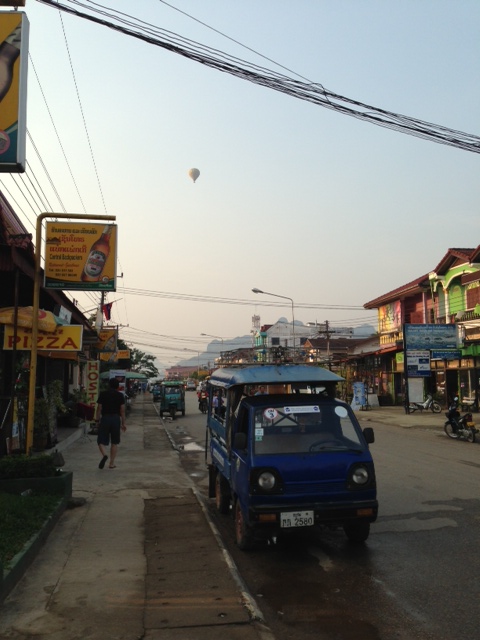
Phonsavan was a strange, decrepit place. We were glad to take another winding, scenic bus ride to Vang Vieng, a small town in the south known for its antiquated party culture. In the past fifteen years, tubing down the Nam Song River became a tourist endeavor and unfortunately, a wild party attraction. Fed up with pulling an overdosed tourist from the river once every ten days, the government shut down the bars alongside the river in an attempt to quell the madness in Vang Vieng. The locals in Vang Vieng were, to put it mildly, cold to us. Who can blame them? Only last year, loud Westerners smoked weed on the streets, wearing nothing but bathing suits, disrespecting Laotian culture and the peace that encapsulates so much of Southeast Asia.

Vang Vieng Street

We decided to observe the social environment, be as respectful as possible, and not take anything personally. There is something artificial about the place; at night, restaurants play Friends or Family Guy on big screen TVs, while tourists sit comotose on beds and eat. Sara loves Friends, so we watched a few episodes. But mostly, I looked around and thought about the stale energy of the place. Vang Vieng is a very different place indoors than out.

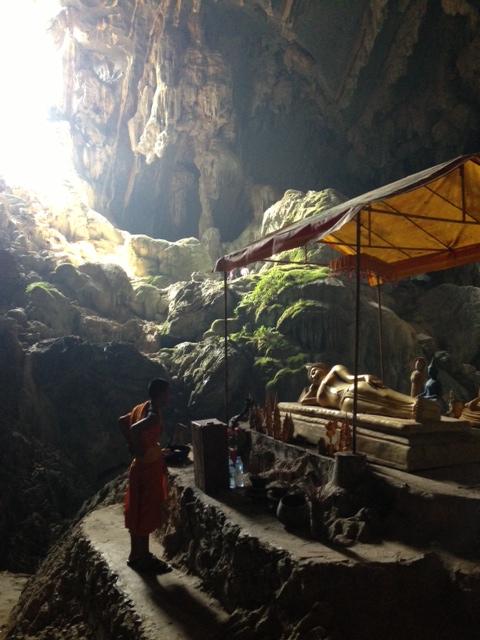
During our three days in Vang Vieng, Sara and I tubed down the river, marveling at the limestone rock faces and jungle walls lining our path. We biked down dirt roads, much to the chagrin of our butt muscles, passing cows and local people, to a cave. We leaped into rivers from sprawling treetops, swam with fish, and drank coconut milk. We made friends. We thought about how lucky we are. We realized how important education is, and how many rural people in Laos never receive the opportunity to go to school.

Bike Shot

Monk in Cave

Sara by River

See that smile?  It keeps on going.  We are headed from Chiang Mai, Thailand to Bangkok tonight on a bus.  I don’t have an iPad to lose this time, so I’ll focus on my latest novel: Roberto Bolano’s 2666. And when I arrive, I’ll be directing all of my energy into singing this, as many times as possible.

Minus One iPad, Plus One Adventure Story

I’m sorry I haven’t written in some time. I am in an dark internet cafe in Chiang Mai, Thailand. I am surrounded by rusty, groaning fans and giggling middle school students playing video games. Although I love Chiang Mai, and have an entire country to document (Laos), this post is going to focus on the journey from Vang Vieng, Laos, to Chiang Mai, Thailand.

thailand-map

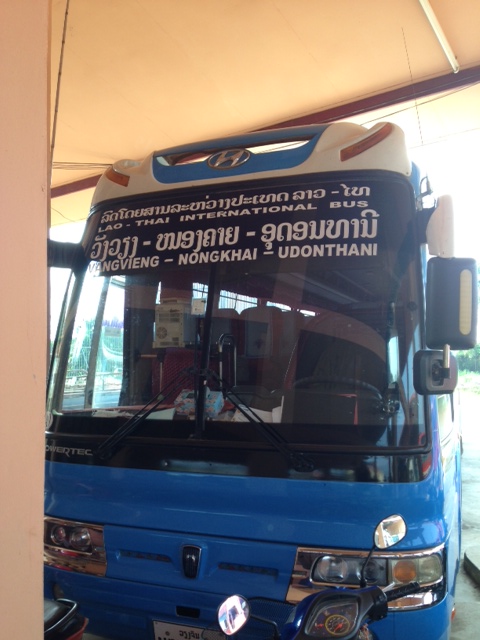
We booked a bus to take us to Chiang Mai, knowing that the journey would take about 24 hours. Sleeping pills, Monopoly cards, and our iPads provided necessary assurance that we wouldn’t lose our minds on the bumpy, twisting roads that connect Laos and Thailand.  We learned quickly that the trip would include several stops and bus switches, designated by arbitrary stickers haphazardly placed on our shirts, and the random suggestions provided by strangers. This was our first bus, which we boarded in Vang Vieng at 10 AM.

Bus

We disembarked the first time in Vientiane, Laos, after a couple of hours passing children playing and bathing alongside the road. As per the request of our bus driver, who quickly drove away – along with our confidence that we would make it to Thailand – we waited on a corner next to a small fruit stand and a couple of taxi drivers resting in the shade. After about thirty minutes, a sputtering tuk-tuk approached. This is a tuk-tuk.

Tuk

The tuk-tuk picked up a few more travelers along the way, two of whom became our travel buddies for the next couple of days: Robert and David, from Rome and Luxembourg respectively. It was fantastic to spend time with such easy-going and fun-loving people. After arriving at another bus stop, we asked around and climbed on a bus headed to Udon Thoni, a Thai town south of the Laos border. I spent the first five minutes of the ride attempting to conquer the mosquitoes that promptly swarmed Sara and me, and the rest of the time entirely engrossed in a book that I picked up at a tiny, used bookstore in Laos. The book, you ask? The book is the reason I lost my iPad, I think. If you consider yourself a passionate person, with an ability to suspend disbelief, and maybe you enjoy cooking and the intimate relationship between food and emotion, read Like Water for Chocolate.

We got off the bus leaving Laos, frantically getting money out of an ATM to pay some kind of exit fee, then off the bus again (with all of our belongings) in Thailand before Udon Thoni, getting our Thai visas and ensuring that we are not meant to be on “Locked Up Abroad.”  By the time we got to Udon Thoni, I was sure that I was in the clear.  What could go wrong?  We had our visas, maybe had one more switch ahead of us, and – as the bus pulled into the crowded and smog-filled bus station – I was reading the last page of my book, transported to a magically realistic Mexico, with tears streaming down my face.  I got off the bus, dreaming of quail in rose petal sauce and true love.  My iPad was tucked into the pocket of the seat in front of me.

After getting off the bus, we were ushered to the flat bed of a pick-up truck, where we relaxed against a mountain of luggage.  Robert, ever the romantic, got out his ukelele and starting playing “What a Wonderful World.”  Sara and I sang along, the wind in our hair and the half-moon shining down, as we raced to another bus stop from which we would leave for Chiang Mai.  It was at this bus stop, ten minutes later and twenty minutes before our final bus would depart, huddled over a plate of fried rice, that I realized I didn’t have my iPad.  I looked at Sara, apologized, told her to go on without me, and set off to find my iPad.  Looking back, I’m fairly sure I knew I would never see it again.  There might have been something in the hunt in which I reveled.

To get back to the original bus stop, I must have climbed into the oldest tuk-tuk with the oldest driver in all of Thailand.  In my panicked state, I should have taken a picture.  I’m pulling money out of my wallet, completely clueless as to the value of any of the bills, begging him to go quickly; he is looking at me with glazed eyes, turning off the engine and cocking his head to the side.  It was the polar opposite experience of that which people in a hurry have in New York City, in which they leap into a cab and scream, “Chase them!” and the taxi cab driver gleefully obliges.  We finally took off, at a breakneck speed of seven miles per hour.  You know how when you’re in a hurry, the lights always seem to turn red right as you’re approaching?  That was us.

When I arrived at the bus stop, after 8 PM, I knew I was in for it.  I ran between buses, coughing through smog, quickly realizing that absolutely no one around me spoke English.  I was playing the fool.  I should speak Thai.  Somehow, I ended up in a small, bright office with orange chairs and ten Thai people waiting patiently for their buses.  Desperately – and egotistically – attempting to tell the entire room that I left my iPad on my bus, typing imaginary air keys to the sound of their laughter, I somehow ended up on the back of a motorcycle with a Thai man, about my age, who spoke no English.  We took off, with me grabbing onto his waist, completely oblivious to where we were headed.  The other bus stop?  His house?  The moon?  I decided to call him Hero.

Hero grinned at me every time I asked him a question.  A big, toothy grin, shot back my direction as he raced between cars and ignored honking tuk-tuks.  The next thing I knew, we pulled onto a small, quiet street.  On the street was my original bus.  I was shocked.  Surely, my iPad would be there!  Where it always was!  Hero and I, without keys, looked at each other.  He grinned one more time and removed (a much more diplomatic word than “broke”) a window.  With the flashlight from his phone, we climbed onto the bus, rushed to my original seat, and sighed.  No luck.  He searched everywhere, including the engine and the driver’s belongings.  The iPad was gone.

We made driving motions, attempting to convey to one another that we still had some fleeting, far-fetched hope that the iPad was safely at home with the driver, awaiting my return.  Upon returning the office at the bus station and hugging Hero, I sat next to the only person in the office who spoke a smidgen of English: an older woman named Sula, whose bangles made clanging noises every time she spoke.  She had terrific gestures, and was proud to show me her favorite bracelet, made entirely of charms engraved with the image of the beloved King Bhumibol.  Sula called numbers that we thought might be the driver, while the remaining people in the office engaged in heated debate over the best course of action, smiled at me, and occasionally broke into fits of laughter.  At one point, everyone broke into cheers when someone on the other end of the line said that yes, in fact, they did find a computer.  But it was a large computer in a case, and as my face fell, everyone in the office shook their heads sadly.

Eventually, Sula looked at me and said, “Annette, come back at nine AM.  Driver arrive then.  You talk to him.”  I asked my Thai family where I should sleep.  Several people attempted to tell me that if they weren’t heading to Bangkok, I could have come home with them.  Sula looked at me and said, “I know place.  But not five-star.”  I couldn’t help but laugh.  I had absolutely no luggage, trusting the amazing Sara, Robert, and David to take care of my bags, which were now on a bus somewhere in central Thailand.  Sula walked me to a small hotel, near the bus stop, with a room with broken shower and a television playing Scrubs.  We hugged goodbye.  I told her she is a gift.

I went to sleep for a few hours after trapping a couple of mosquitoes in the bathroom and reflecting on privilege.  I hadn’t learned the lesson yet.  All I could think was that I had just left one of the poorest countries in the world, and I must be a real shit to be such an airhead.

When I woke up the next morning, I went to the bus stop and postulated who might be the new owner of my iPad.  Because Sara was nearly the last person off of the bus, I’m guessing that the iPad is now in the hands of the young man who works for the bus company and collects tickets from the passengers.  He needs it more than I do, surely, with all of the agonizingly long bus rides he takes.  When I waited for the bus driver to arrive – who eventually showed up with the ticket collector, each shaking his head emphatically when I told them I left my iPad on their bus – a man working at the station gave me six small, ripe bananas and ate them with me.  I looked around the bus station for the last time and finally realized that the experience had absolutely nothing to do with an iPad, and everything to do with humility and gratitude.

Somehow, I used my phone to book a flight leaving five hours later for Chiang Mai.  I hopped into a tuk-tuk headed for the airport with a driver who jokingly, using gestures, asked me if I wanted to drive.  I laughed and told him that it wasn’t our day to die.  When I arrived at the airport, I was somehow able to get through security and walk directly onto a propeller plane leaving for Chiang Mai in ten minutes.  No waiting, no fee, nothing but clear skies and time to reflect.  By the time I walked into the garden of our hostel in Chiang Mai, energetically drawn to the shining figure of Sara, laying in the sun and worrying about my whereabouts, I was happy.

People spend hundreds of dollars on tours to have “authentic” experiences when they’re abroad.  Instead of berating myself for my humanity, I am choosing to look at the scenario like this: I paid a few hundred extra dollars to have an authentic Thai experience, in which I was welcomed to this beautiful country with kindness, humor, and ripe bananas.

Ascending Dragon, Descending Dragon: Hanoi and Halong Bay

Written on February 11th:

Arriving in Hanoi from Dong Hoi was somewhat disconcerting; in four days, I had forgotten the frantic pace of the city, the sounds of motorcycles and women blowing horns to collect trash permeating thick, gray smog.  Hanoi (which means ascending dragon) is a maze of tall, colorful, skinny buildings, built in such a fashion so as to avoid the high prices of property per square meter.  There is a slightly different sentiment toward westerners in the north.  People smile a little bit less, although compared to the rest of the world, the good will is still abound.
Image
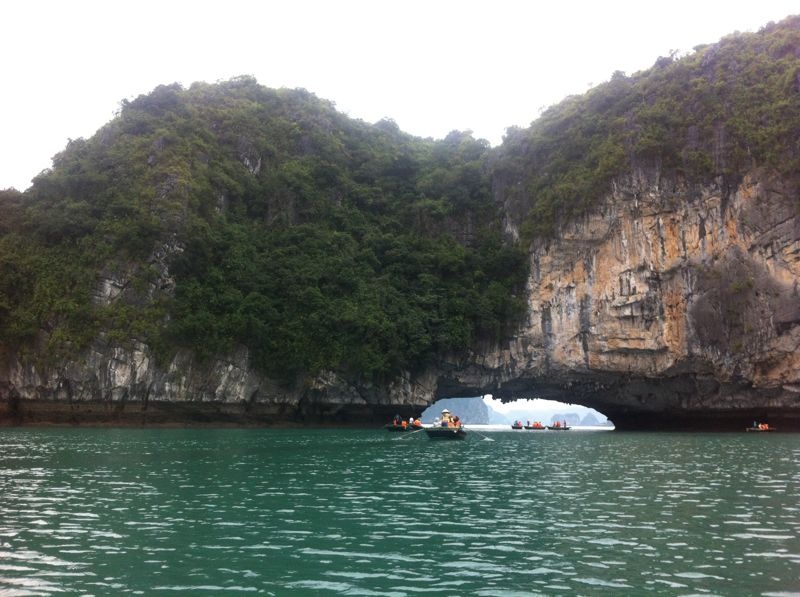
Sara and I hopped on a cruise boat – the Paloma – to see Halong Bay (descending dragon), which is a beautiful five hour drive east of Hanoi.  Halong Bay is one of the new Seven Natural Wonders of the World, an infinite labyrinth of limestone structures rising out of the green waters of the South China Sea.  An elephant made out of towels greeted us in our cabin.

Image

Image
After a ten-course lunch (a cruise is a cruise is a cruise), we left our boat to kayak around a fishing village buried deep in the heart of the jungle-clad islands.  Most of our boat decided to be rowed around on small, wooden row-boats, “manned” by small, incredibly strong Vietnamese women.  Soon enough, Sara and I were considered Olympic kayakers by our cruise companions.  We paddled ahead of our group to wave to the local people, swinging from hammocks or fishing for squid from their floating homes.  We reached a sort of stone tunnel – a little eyelet – that led to the open ocean, laughing again in disbelief at the splendor of our natural surroundings.
Image
Image
We celebrated Tet, the Lunar New Year, aboard the Paloma, returning to Hanoi the next night to search the streets for pho.  Most of Hanoi was quiet.  The city had an calm, eerie feeling to it, punctuated by the sounds of families drinking rice wine or the occasional motorcycle speeding to deliver a toy to a waiting child.  Backpackers roamed the city like scavenger dogs, finally settling on a solitary sidewalk pho vendor who was prepared to profit off of hungry tourists.  She certainly profited off of us, and as we slurped ourselves to a satiated oblivion, we certainly didn’t mind.

We are now flying from Hanoi to Luang Prabang, Laos.  We have no idea what to expect, although we have nine days to explore jungle, hike to waterfalls, determine our own answer to the riddle of the “plain of jars,” and tube down the Nam Song River in Vang Vieng.  Vietnam could not have provided us a more gracious and breathtakingly beautiful welcome.  If the rest of our trip is anything like the last ten days, well, words simply don’t suffice.