An American in Vietnam

I remember being on a field trip in the second grade, riding in the tiny backseat of the pick-up truck of a classmate’s father.  I don’t remember the context, but somehow the Vietnam War was mentioned.  Parroting my Dad because I had absolutely no idea what I was talking about, I said something about the war being a huge mistake.  I remember the father looking at me, stone-faced, in the rearview mirror, and feeling his immense and powerfully somber energy in the moment.  Upon returning home, I told my Dad what happened.  He looked at me and said, “Avoid talking about the Vietnam War with people you don’t know.”  Sage advice.

Coming to Vietnam, I was hoping to learn more about the effect the United States has had on this beautiful country.  I have read enough to know the pretext under which the United States invaded, the glorious mission we felt we had to accomplish, and the tragic losses suffered by both sides.  Still, I only had a vague idea of what it means to be Viet Cong, and I was curious as to how, today, an American would be treated on Vietnamese soil.

Sara and I decided to go to War Remnants Museum our first day in Saigon.  We went with our friend Sean, a brilliant FBI agent who was also staying at our hostel.  I don’t think any of us were expecting three stories of brutally honest accounts of how the Vietnamese suffered during the “American War.”  We decimated this country – its people and its landscape – killing over three million people (including two million civilians).  Forty years later, we have seen people suffering from the effects of Agent Orange on the street.  We have seen vast expanses of barren land where they should be lush forest.

image
Yesterday we went to the Cu Chi tunnels, with were used by the Viet Cong (guerrilla fighters) to store weapons and hide from American bombs.  We went as part of a tour, led by a kind Vietnamese man who called himself John Wayne.  I sat next to him on the way to the tunnels.  We talked about his wife, his hometown, and his dream of taking a vacation.
image
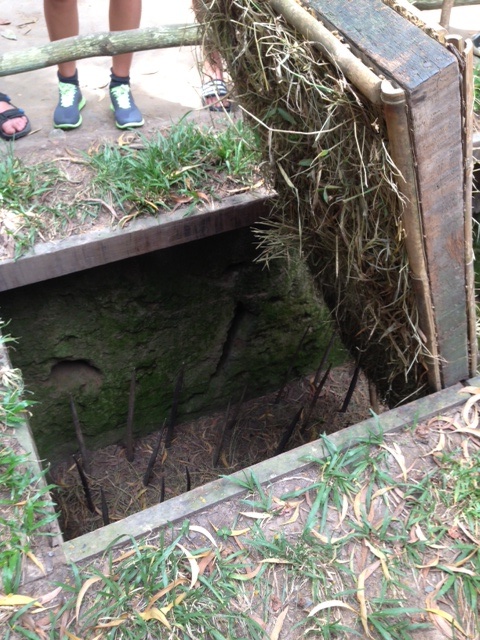
At the tunnels, we saw the traps set for American soldiers, hidden among endless trees.  I cannot imagine the fear in the hearts of all of those involved.
image
The tunnels, although small (only a meter tall and 80 centimeters wide), are an immense underground system.  We had the opportunity to crawl through one, and although initially balking at the idea, Sara and I decided to face our fear and tackle it.  We talked in frantic, high-pitched voices about something trivial while we crawled, a futile attempt to calm ourselves down.  It was horrifying and claustrophobic the entire time, but we were proud when we made it through.
image
Sadly, during one part of the tour, tourists are granted the opportunity to shoot AK 47s at a shooting range.  I found the sound of gunfire as we walked through the trees incredibly unnerving.  Haven’t enough guns been used in this space?  In any space?  I feel uncomfortable and profoundly sad just writing about it.  The thought of war, of the men who served in the Vietnam/American war, of the fear and confusion they must have felt, and the fear and confusion being felt by men and women in Iraq and Afghanistan today, is all overwhelmingly sobering.

I have been thinking about how the veterans of the Vietnam War were treated upon returning the United States, and about how they are treated now; I am brought back home to the VA office and bar (what a terrible combination) that used to be on Newport Avenue.  I cannot imagine returning from this socially and environmentally beautiful country, which was transformed into a vast and unforgiving hell,  and the feelings of immense isolation that must have pervaded every veteran’s mind.  I cannot imagine the feelings of those returning home today from the Middle East who are experiencing the same loneliness.

The tunnels got me thinking of one of the most profound books I have read in my life: Tim O’Brien’s The Things They Carried.  Here is the passage that has been on my mind:

“They carried USO stationery and pencils and pens. They carried Sterno, safety pins, trip flares, signal flares, spools of wire, razor blades, chewing tobacco, liberated joss sticks and statuettes of the sniffing Buddha, candles, grease pencils, The Stars and Stripes, fingernail clippers, Psy Ops leaflets, bush hats, bolos, and much more. Twice a week, when the resupply choppers came in, they carried hot chow in green Mermite cans and large canvas bags filled with iced beer and soda pop. They carried plastic water containers, each with a two gallon capacity. Mitchell Sanders carried a set of starched tiger fatigues for special occasions. Henry Dobbins carried Black Flag insecticide. Dave Jensen carried empty sandbags that could be filled at night for added protection. Lee Strunk carried tanning lotion. Some things they carried in common. Taking turns, they carried the big PRC-77 scrambler radio, which weighed thirty pounds with its battery. They shared the weight of memory. They took up what others could no longer bear, Often, they carried each other, the wounded or weak. They carried infections. They carried chess sets, basketballs, Vietnamese English dictionaries, insignia of rank, Bronze Stars and Purple Hearts, plastic cards imprinted with the Code of Conduct. They carried diseases, among them malaria and dysentery. They carried lice and ringworm and leeches and paddy algae and various rots and molds. They carried the land itself. Vietnam, the place, the sod -a powdery orange-red dust that covered their boots and fatigues and faces. They carried the sky. The whole atmosphere, they carried it, the humidity, the monsoons, the stink of fungus and decay, all of it, they carried gravity. They moved like mules. By daylight they took sniper fire, at night they were mortared, but it was not battle, it was just the endless march, village to village, without purpose, nothing won or lost. They marched for the sake of the march. They plodded along slowly, dumbly, leaning forward against the heat, unthinking, all blood and bone, simple grunts, soldiering with their legs, toiling up the hills and down into the paddies and across the rivers and up again and down, just humping, one step and then the next and then another, but no volition, no will, because it was automatic, it was anatomy, and the war was entirely a matter of posture and carriage, the hump was everything, a kind of inertia, a kind of emptiness, a dullness of desire and intellect and conscience and hope and human sensibility. Their principles were in their feet. Their calculations were biological. They had no sense of strategy or mission. They searched the villages without knowing what to look for, nor caring, kicking over jars of rice, frisking children and old men, blowing tunnels, sometimes setting fires and sometimes not, then forming up and moving on to the next village, then other villages, where it would always be the same. They carried their own lives. The pressures were enormous. In the heat of early afternoon, they would remove their helmets and flak jackets, walking bare, which was dangerous but which helped ease the strain. They would often discard things along the route of march. Purely for comfort, they would throw away rations, blow their Claymores and grenades, no matter, because by nightfall the resupply choppers would arrive with more of the same, then a day or two later still more, fresh watermelons and crates of ammunition and sunglasses and woolen sweaters-the resources were stunning -sparklers for the Fourth of July, colored eggs for Easter. It was the great American war chest-the fruits of sciences, the smokestacks, the canneries, the arsenals at Hartford, the Minnesota forests, the machine shops, the vast fields of corn and wheat they carried like freight trains; they carried it on their backs and shoulders-and for all the ambiguities of Vietnam, all the mysteries and unknowns, there was at least the single abiding certainty that they would never be at a loss for things to carry.”

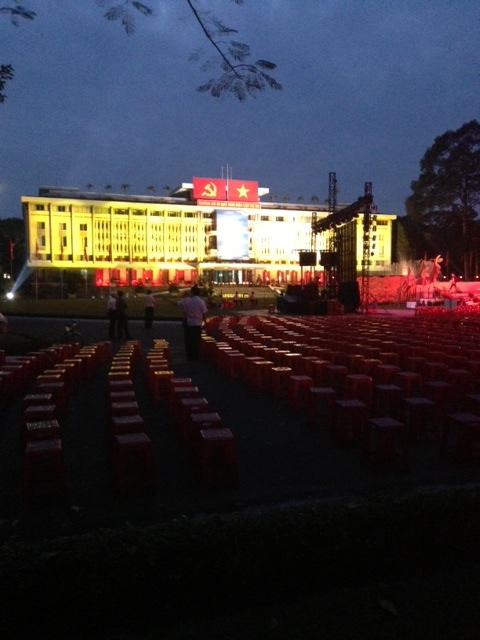
Today, Vietnam seems politically stagnant.  The same red propaganda posters that I saw in Cuba decorate billboards here, with young army clad people staring into a bright future.  However, there does not seem to be political unrest or many contentious political attitudes.  Images of a withered Ho Chi Minh can be seen around the city, but people are too busy not getting hit by motorcycles to even notice the socialist disseminations speckled on the sides of buildings.  I will endeavor to further explore the social-political attitudes of the Vietnamese in the next week.  The book that I am currently reading, Frances Fitzgerald’s The Fire in the Lake, says that the political beliefs of the Vietnamese are just as present as they would be in any other country.  However, the Vietnamese people have an entirely separate perspective of “self” than Americans.  He says: “Time after time Westerners have been surprised by the suddenness of political change in Vietnam, by its seeming lack of motivation. But the motivation is always there. It is just that, given the commitment the Vietnamese have to their society, it remains hidden, and for the majority of the people, hidden even below the surface of consciousness, until in the old language the will of Heaven manifests itself and the success of the rebellion appears assured.”
image
As for how Sara and I have been treated, as young Americans?  We have been welcomed with a warm smile by every Vietnamese person with whom we have spoken, and even those we have merely passed briefly on the street.  The Vietnamese people we have experienced possess a kind and affectionate spirit that flows naturally to people of all nations.

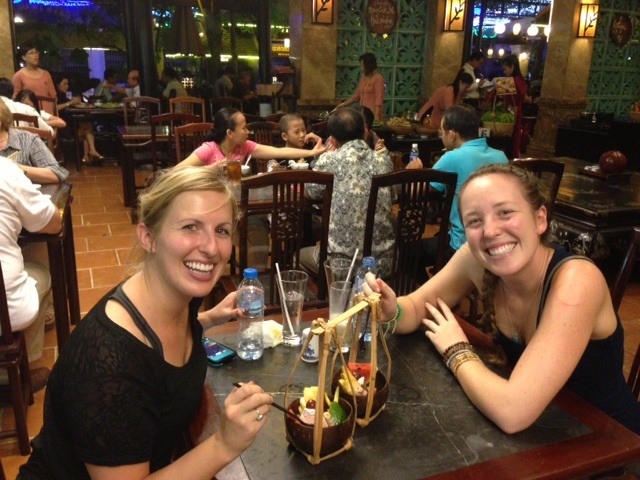
I couldn’t be more thankful to be with my friend Sara.  She is curious, thoughtful, and always conscious of herself and others.  Her kindness and adventurous spirit know no bounds!  I am so honored to be her friend.  She and I are planning on learning as much as we can on this transformational trip, about the world, each other, and ourselves.  After our experiences on the first days of our trip, we are more determined than ever to be forces of peace and love in the world.
image

Saigon: Em Yeu Anh

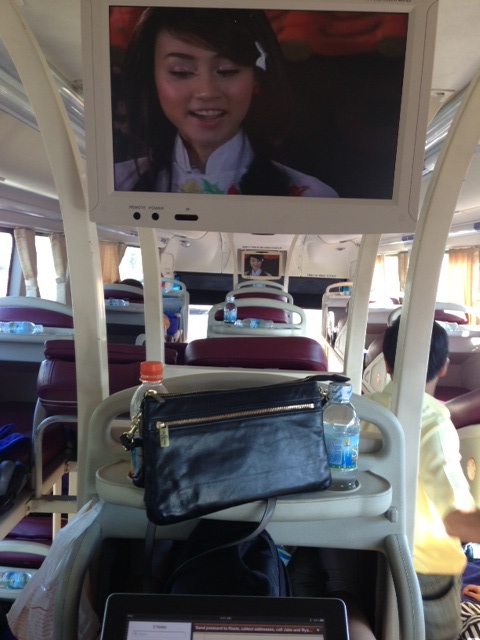
I am writing from a sleeper bus on the way to Nha Trang, a beach town eight hours north of Saigon (Ho Chi Minh City). It is, by far, the most comfortable bus I have ever ridden, despite the eighties quality Vietnamese music playing full blast. Sara is lying in her separate bed next to me, legs splayed lazily in front of her, looking out the window at the rice fields and roadside vendors that pass by. Our shoes were collected before we got on. We are eating the bananas we bought in our alley this morning.

image

Arriving in Vietnam from Barcelona was an adventure. I sat next to a drunk man from Kuwait on the flight from Qatar to Bangkok – I had a couple of layovers – whose only English (or Dutch?) seemed to be “Heineken.” When our plane stopped in Bangkok, the people continuing onto Saigon stayed on. Some Vietnamese men saw that I was staying and laughed at me, marveling, “You? Saigon?” I laughed, replying, “I’ll fit right in, no?”

Saigon is a beautiful mess. It is a labyrinth of colorful alleyways, covered markets, and motorcycles. Crossing the street is an endeavor about which I will not write in immense detail, if only for my mother’s sake. Let’s just say that Sara and I cheered and high-fived more than once after touching our feet to the relative safety of a sidewalk.

image

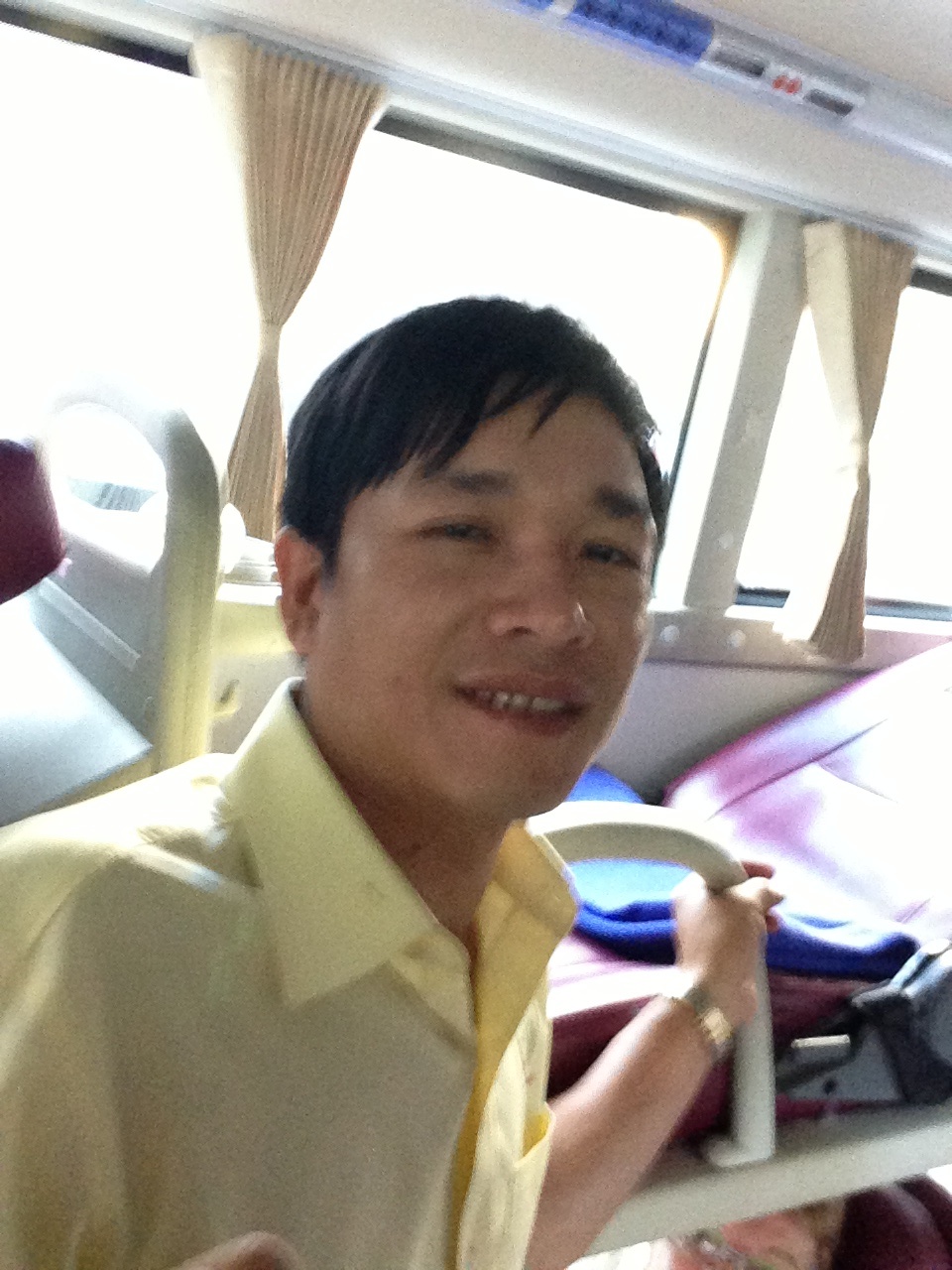
The Vietnamese people are incredibly gracious and welcoming. The slight young man in charge of tickets on our bus just came and looked at what I was doing. He asked me my name, and told me that his is Lee. Lee says hi.

image

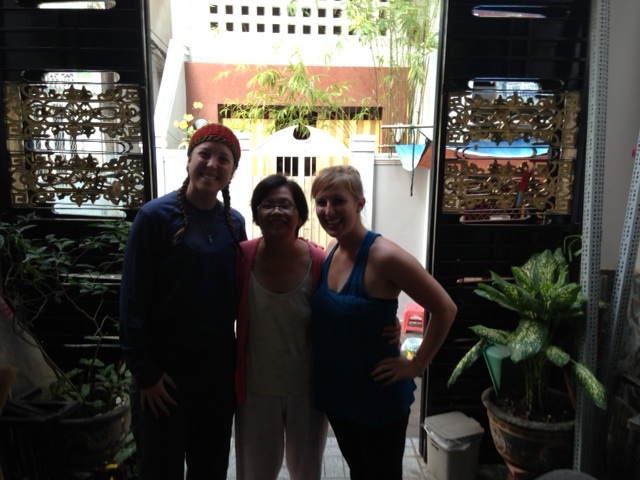
The hostel owners with whom we stayed, the Anhs, were infinitely helpful and kind; they told Sara and me that we could come back anytime and “stay one month free.” We hugged goodbye and felt genuinely sad to leave our first Vietnamese family.

image

The prices here are unfathomable. In the three days that we have been here, we have spent around eighty dollars each (or 1,600,000 Vietnamese dong), which include: the nights at our hostel, all of our food (I’ll get to that later), our bus tickets, admission to the Cu Chi tunnels, and an hour-long foot massage ($3.50). We are already becoming stingy; if a beer is more than fifty cents, there’s a problem. Sara and I have been saying, in a somewhat uncouth manner, that you get a lot of bang for your dong here.

There have been a couple of moments during which I have wondered how I will ever go back to the United States, and during each moment I was eating. The food here is the epitome of flavorful.

image

Hints of pho linger on my clothes. Smells waft from sidewalk hot pot (soup), chicken, beef, beer, and noodle vendors. The tiny alleyway in which our hostel was located was filled with older women with low plastic tables and chairs, cooking pho and spring rolls. Our first day, we went to the Kitchen Lady, a staple on Anthony Bourdain’s “No Reservations” show in Vietnam. The first thing Sara did upon receiving our pho was ask for the spiciest sauce available.  Some things never change.

image

I’ve been enjoying more experiences with taxi drivers; I find myself wanting to write about them especially because of my Mom’s book idea. My taxi driver in Saigon was Minh, who drove me to the airport in the middle of the night to pick up Sara. Her flight arrived at 2 AM; it was absolutely incredible to see this tiny, smiling blonde charge into the humid Vietnamese heat with a thirty pound backpack that was trying, in vain, to weigh her down. Minh taught me Vietnamese the entire way to the airport while I furiously took notes in the backseat. His English was incredibly limited, but we communicated beautifully. I can now say hello, how are you, fine, thank you, I love you, right, left, straight, go back, and smoothie. Everything else can just be communicated through smiles, I guess.

We are now heading to Jungle Beach for three days, where we are staying in a bamboo cabana on the beach. I am hoping to get some scuba diving in! From there, we are staying at a farmstay at Phong Nha-Ke Bang National Park for another few days, after which we will travel to Hanoi and spend a night on a boat in Halong Bay. We initially planned to take trains everywhere; unfortunately, when we went to buy train tickets, we were told that every single train heading north from now until February 10th is completely booked due to Tet, or Vietnamese New Year. We figured it out, booking a series of buses and trains, and we are excited to be here for the largest festival of the year in Vietnam!

By the way, rubber trees are called “condom trees” here. Awesome.

image

Go East, Young Woman

Spain is magical.  I don’t know how else to say it.  As I sat in the plaza of the Catedral de Santa Maria del Mar, drinking wine until three AM with Edward, I realized that if I lived here I would never grow old.

Barca

Tapas with Edward and Xavi

Tomorrow I say goodbye to my mother, and Spain, and go farther away from home than ever before.  I am feeling sentimental, especially after falling, however briefly, back into the fairy tale that was my life in Spain five years ago.  I am ready, however, to expand my perspective of the world, and to do this with an open mind and an open heart.  I am willing to be vulnerable, because I know it only makes me stronger.  Vietnam, here I come.

How do you spell it? PAELLA.

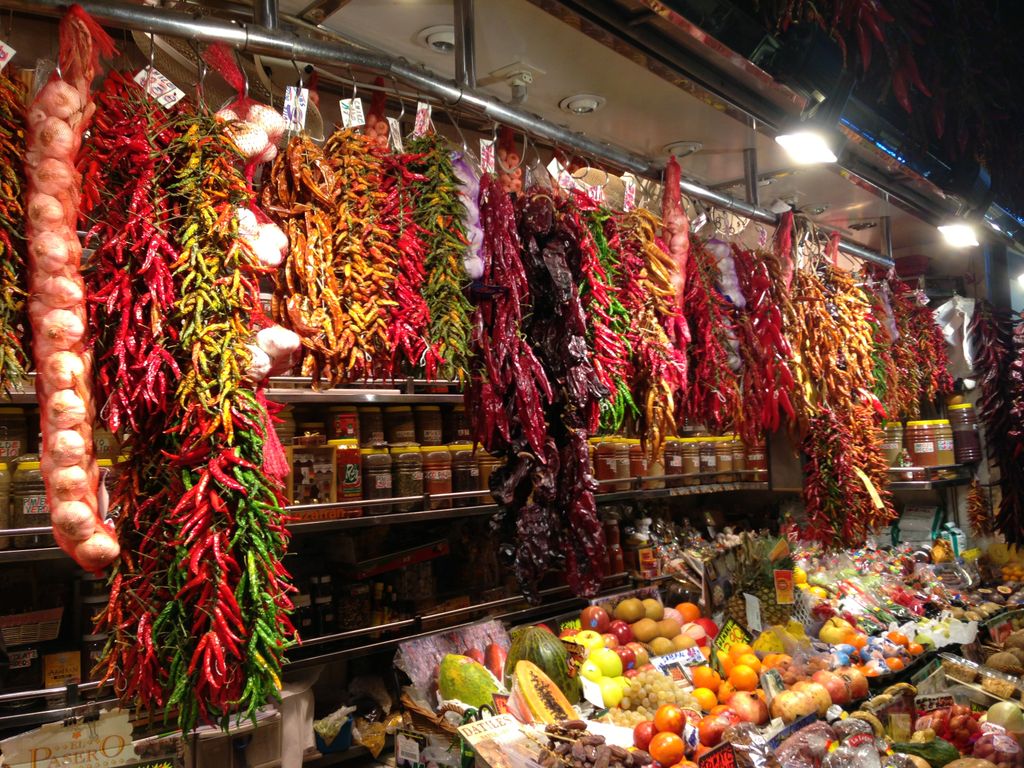
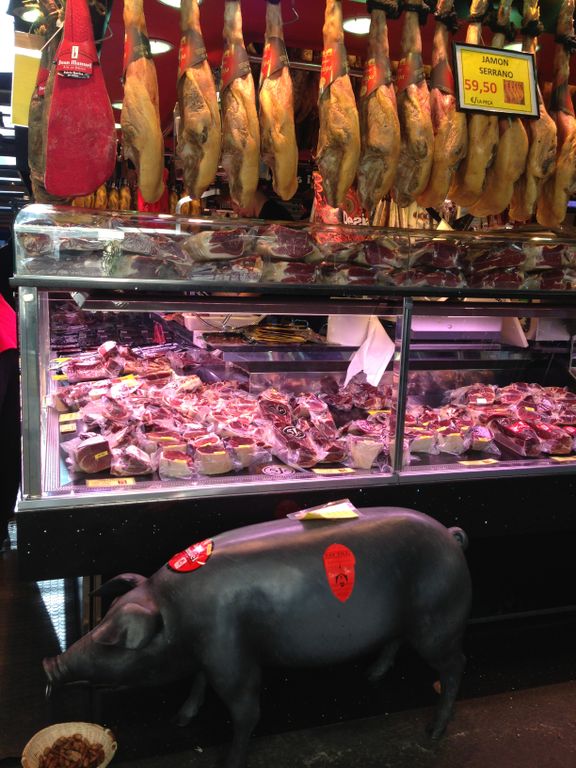
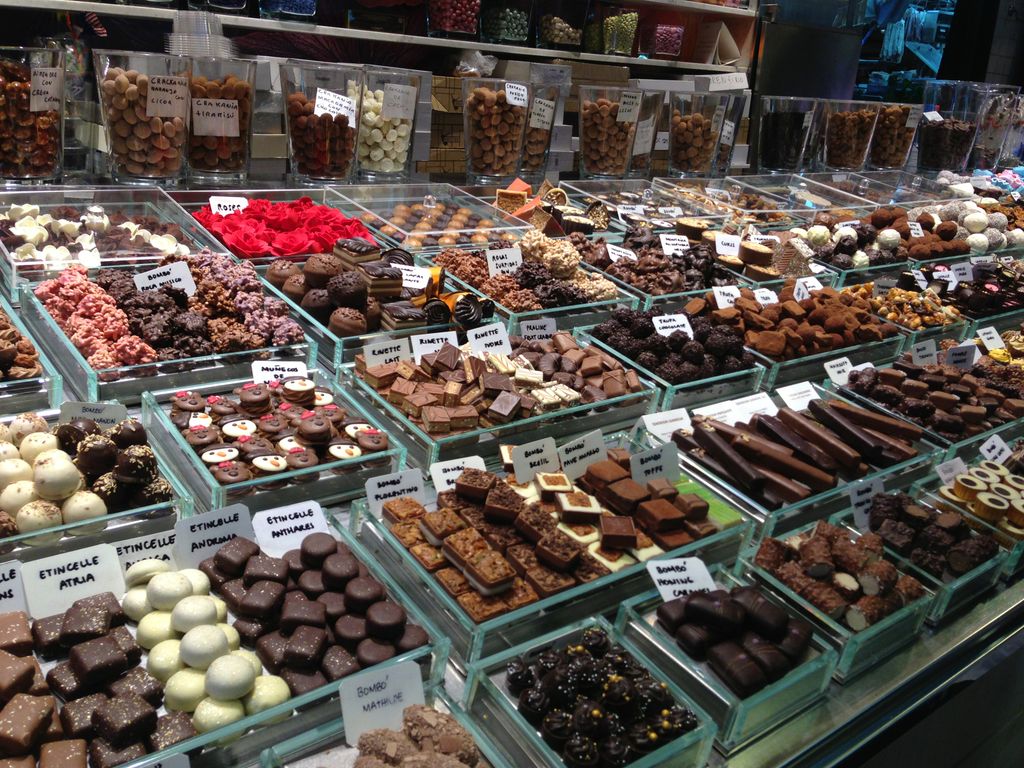
Our hotel is on La Rambla, one of the main drags in the center of Barcelona.  About one block away is a world-famous marketplace, called El Mercat de la Boqueria.  It is a maze of vendors, selling everything you can imagine, from giant fish heads to hanging pig legs to seas of chocolate, spices, and nuts.

Barca 1I know that my father would love it.

If you’ve been close with me in the last few months, you know that I’ve started to cultivate a knowledge of the culinary arts.  I was never much of a cook, and always watched in awe as Bianca or Jake or Faycal took over in a kitchen.  I always wished I possessed what I thought was innate, the ease with which some of my friends chop, and mix, and smell and smile … at just the right time.

I decided awhile back to learn how to cook, which is really a process that only takes a willingness to completely destroy dinner.  Thankfully, I have had a series of teachers who have taught me some of their brilliance, including Elba and Levent Ozakcay, to whom I owe the recipe below.  Elba would insist I tell readers that when cooking paella, you must put a penny on the stove for good luck.

Paella

This recipe includes both

Barca 4

and

Barca 3

Ingredients:

  • 4+ cups chicken stock (with a bay leaf and a little rosemary)
  • 1/2 cup dry white wine
  • Juice of 1/2 lemon
  • 1 bay leaf
  • 1/2 bag frozen artichokes
  • 1 tsp. course sea salt
  • 1 tsp. saffron threads
  • 5 garlic cloves, thinly sliced
  • 6 chicken thighs
  • 1/3 pork loin
  • 1/2 pound pork sausages
  • 7 oz. cleaned squid
  • 1 cup olive oil
  • 1 yellow onion, thinly sliced
  • 1 red bell pepper, seeded and cut into one-inch strips
  • 1 lb. ripe tomatoes, peeled, seeded, and finely chopped
  • 2 1/2 cups risotto-type short-grain rice
  • 1 cup shelled English peas, fresh or frozen
  • 6 oz. Monk, Red Snapper, Cod, or Hake fish
  • 24 large mussels
  • 12 medium shrimp, peeled
  • Fresh flat-leaf parsley for garnish
  • 1 lemon for garnish

Directions:

1. In a saucepan over medium heat, bring the stock to a gentle simmer and maintain over low heat.  Add bay leaf and rosemary.

2. Cut chicken, pork loin, and sausages into 1 inch pieces.  Slice the squid into rings leaving the tentacles whole.

3. Place a 16 inch paella pan or a large, wide, heavy bottomed frying pan over high heat (or over a metal ring set on a rack over coals) and carefully pour in the olive oil.  When the olive oil is hot, add the chicken, pork, sausages, and squid and saute until golden, about ten minutes.  Using a slotted spoon, transfer the meat and squid to a plate and set aside.  Reserve the pan with the remaining oil.

4. Drain the artichokes and add to the paella pan.  Add the onion, bell pepper, and garlic and saute over medium heat until the onion is translucent and beginning to brown, about 3 minutes.  Return the meat and squid to the pan and add the tomatoes, stirring to evenly distribute tomatoes.  Add two ladleful of the stock and simmer for 1-2 minutes.

5. Stir a little of the stock with the saffron and mix well.  Pour into the saucepan of stock.  Add wine and juice of one lemon.

6. Add the rice to the paella pan, followed by the peas and all but 1/2 cup of the remaining stock.  Stir everything together thoroughly.   This the the last time you will stir the paella, so add a little salt if you see fit.

7. Cut the fish into 1-inch pieces.  Scrub the mussels with a stiff brush.  Debeard them by scraping off the tuft of fibers with a knife.  Remove them from their shells if desired.  Arrange the fish, mussels and shrimp on top of the rice mixture, discarding any mussels that do not close to the touch.  Return the paella to a simmer and cook until the meat and fish are cooked through and the rice is tender but not too soft, about 45 minutes.  If the mussels are in their shells, discard any that failed to open.  If the paella is not done yet and all the liquid is absorbed, add a little of the reserved stock as needed.

8. Turn off the heat, decorate with the lemon (half in the middle and the other half cut up into wedges spread evenly around the rest of the dish).  Cover the pan with a clean, dry kitchen towel.  Let stand for about 20 minutes to allow the flavors to mingle thoroughly and the rice to absorb any remaining juices.  Serve warm, not hot, garnished with the parsley.

Serves 8.

Barca 6

And for dessert?  Yes, please.

Barca 2

Barthelona

Barcelona is just as I remember: filled with passion and culture.  Today, while walking back to our hotel from Gaudi’s Park Guell, we happened upon a massive group of swing dancers in a church square.  Image

Spain has always felt so alive to me.  I have always felt so alive in Spain.  It is strange being here five years after studying abroad, falling in love, being completely immersed in a culture not my own, and yet feeling so right in myself.  Last night, we went to see a classical guitarist – Pedro Gonzalez – perform in the Basilica de Santa Maria del Pi.  Seeing such talent in such an old, somber setting was wonderful.  It felt extra Spanish because the performance began at 9:30 … excuse me, 21:30.

Edward is driving from Madrid tomorrow to spend an evening with us.  I’m excited to see him; we’ve both grown so, and he is such a kind person to drive so far just to spend a little time together!  I remember the first time that we came to Barcelona.  I was terribly fortunate to have a Spaniard show me his country.  And what do you know, la Sagrada Familia is still under construction today…

Image

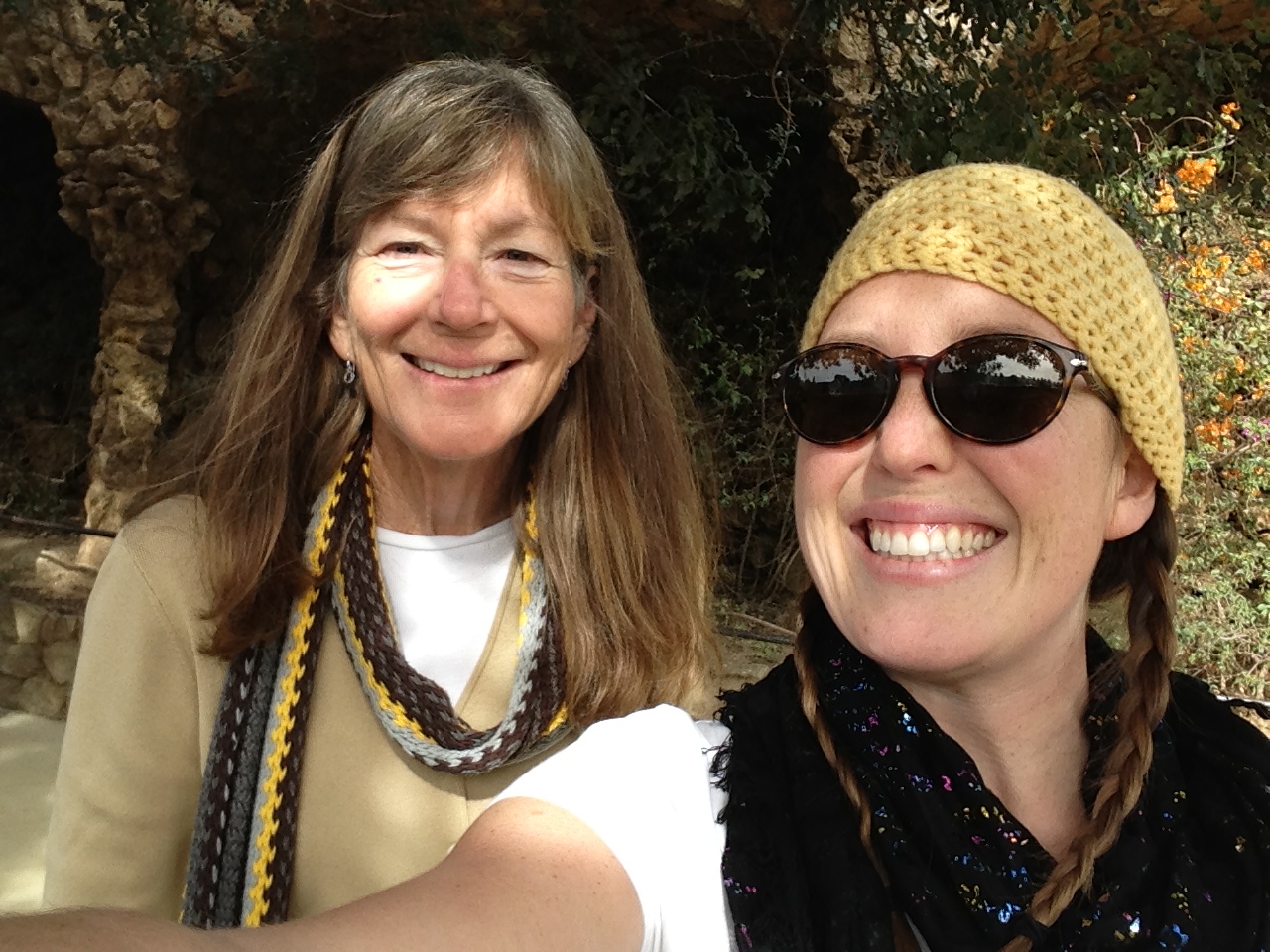
Mom and I have been getting on great.  I’m so lucky.

ImageMy next blog post will likely be a paella recipe.  Look out.

Symphonies and Scones

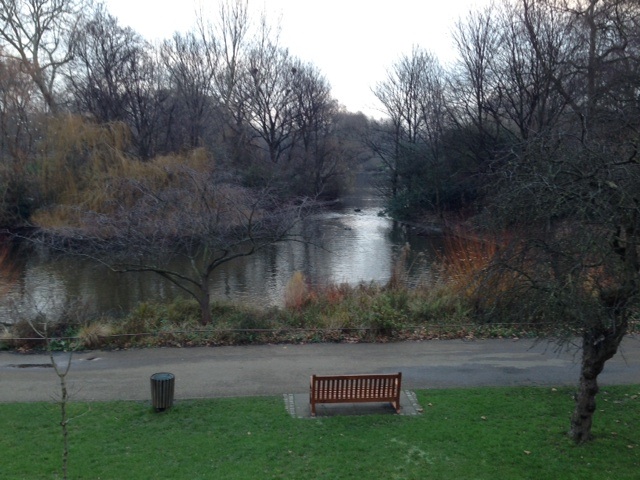
England was wonderful, and all looked a bit like a movie set, or a fairy tale.

2013-01-19 12.08.59

I was fortunate to visit some wonderful friends at Oxford, all of whom are busy getting graduate degrees.  We ate inside a dining hall with long wooden tables and dark oil portraits on the walls.  I kept waiting for Hagrid to walk in.  Oxford is a beautifully strange place.  While rife with history, literature, and genuine prestige, I got the impression that the experience one has there, both inside the classroom and out, is somewhat insular.  Theoretical knowledge is grand, but when and where does the nitty-gritty happen?  We need more smart people to go out and get their hands dirty.  I know my friends absolutely will, and I’m proud of them.

The most wonderful experience I have had so far on this trip was seeing the Oxford Symphony perform in the Sheldonian Theatre on Oxford’s campus.  They played Mozart, Gershwin, and Strauss in an incredibly intimate setting.  I was definitely velklempt at the sheer beauty of it.

You know what else rocks?  Scones.  The English know how to do tea time right.

2013-01-21 13.46.08

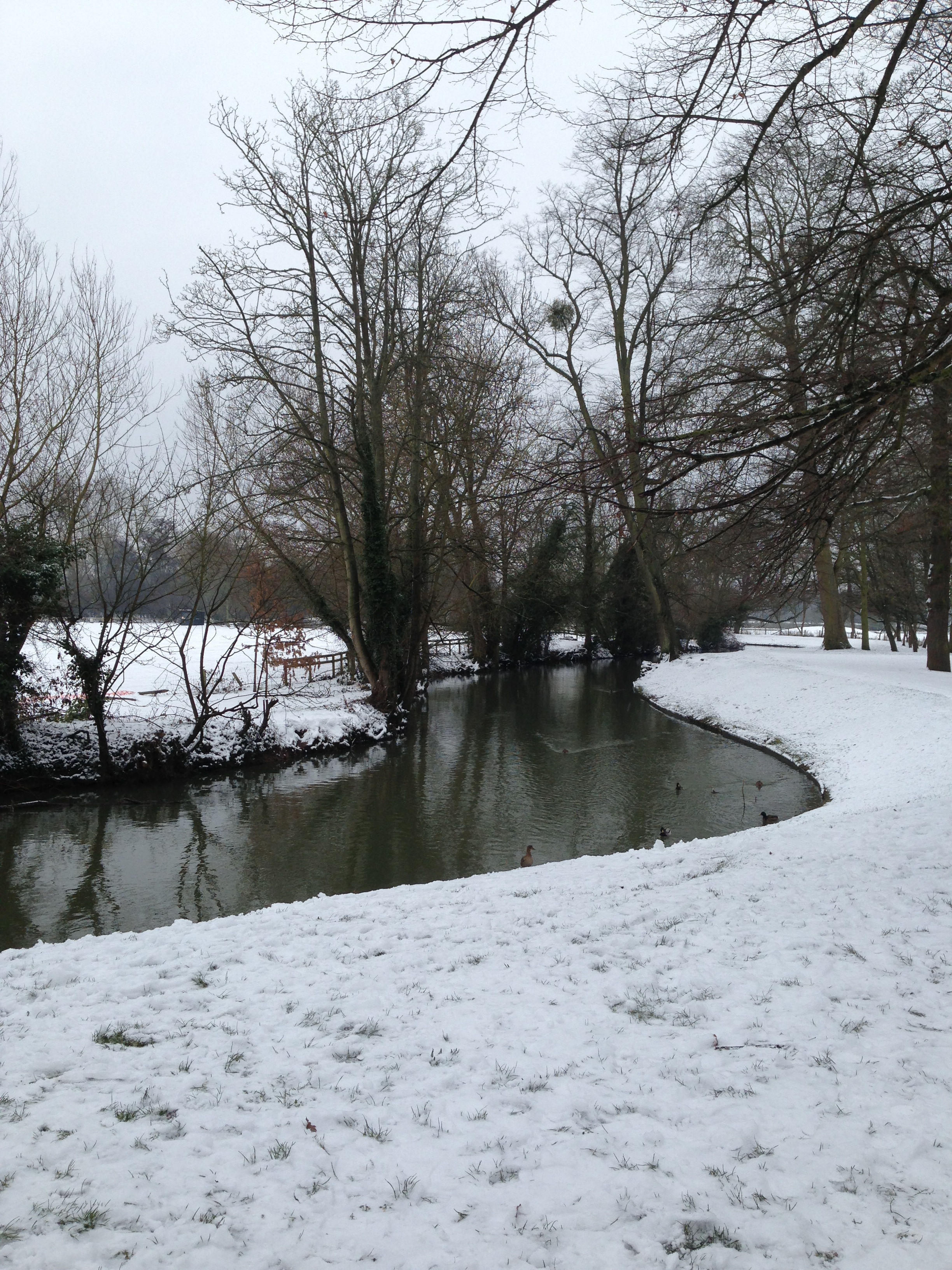
Taking a train-bus combination from Oxford to Brighton was remarkably picturesque.  It was snowing, and looked like a Grandma Moses painting.

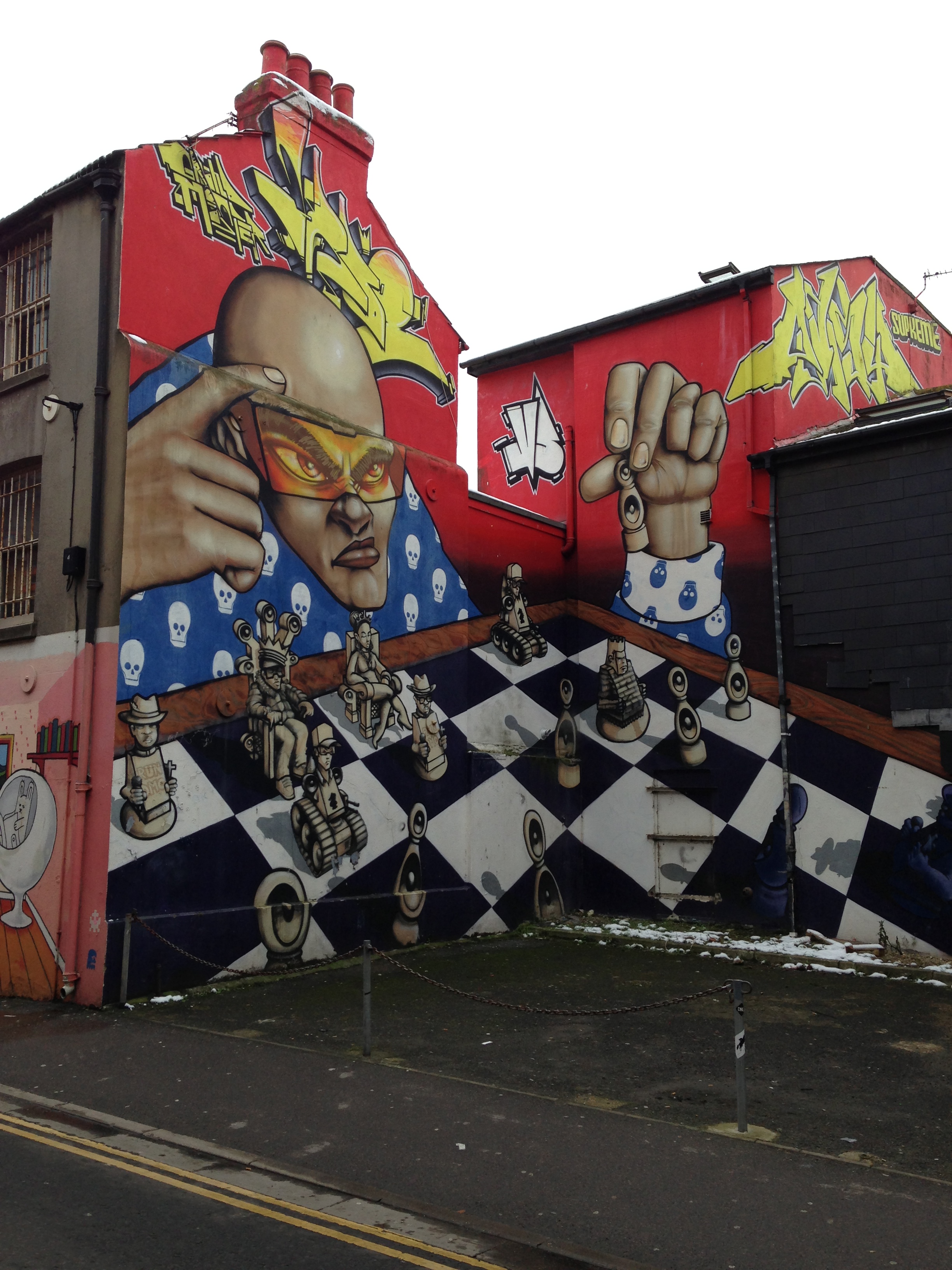
Grandma MosesI was surprised by how much I loved Brighton.  Our hotel had Freddie Mercury quotes all over the walls, reminding me how much I owe the British for their music.  The city itself was quaint, with street art covering the sides of plenty of buildings.  You could see how much of a wonderful escape Brighton must be in the summer time.  It was nice to hear sea-gulls again.

Gangsta chess, anyone?

2013-01-21 12.20.41

Back in London, we definitely enjoyed ourselves at the theatre, seeing two plays and one musical (Billy Elliot, of course).  Once we were able to understand the accents, we got into the dry sense of humor that is quintessentially English.  Hilarious, really.  Most of the taxi drivers we had made us laugh hysterically, giving my Mom the idea that I should write a book about all of the conversations I’ve had with taxi drivers during my travels.  From the experiences I had with taxi drivers in Chile, to the conversations we’ve had on this trip, I think I already have a pretty intense endeavor ahead of me.  It could be called ¨The Gift of Cab: Insight from Taxi Drivers from Around the World,¨or maybe something less cheesy and long.

Unhistoric Acts

I think I have a problem.  When I am walking the streets of London, every older woman is Maggie Smith and every young boy lives like Oliver Twist.  Queen, Pink Floyd, and Robbie Williams have been on repeat in my head.  I feel like last year’s Olympics; I disparage this country with my trite English clichés.

Our first stop upon arrival was Westminster Abbey.  Poet’s Corner is a spot within the cathedral that houses the remains of many of the world’s most prolific writers, from Robert Browning, to Geoffrey Chaucer, to Jane Austen.  I found the grave of the author of my favorite literary quote: George Eliot (really, Mary Anne Evans).

The quote is from Middlemarch: “But the effect of her being on those around her was incalculably diffusive: for the growing good of the world is partly dependent on unhistoric acts; and that things are not so ill with you and me as they might have been, is half owing to the number who lived faithfully a hidden life, and rest in unvisited tombs.”

image

London is cold and gray, but the people have been remarkably friendly.  Aziz, the “host” of a random church Mom and I stopped into, gave us a tour of the building, telling us about his life as a Londoner.  Taxi cab drivers have been warm and understanding; random English people on the street have stopped and offered to take our picture.  Mom and I are feeling right at home.  George was right about those unhistoric acts.

image

Into the Great Wide Open…

It’s never easy leaving paradise.

imageI am a myriad of emotions: excitement, anxiety, joy, nostalgia…

More than anything, I feel immense gratitude.  I have so much loving energy in my life, so many wonderfully supportive and generous friends, friends who have asked me to “scream my name in the place that steals your heart,” friends who have told me that they “will always be here to put life back together” with me if I get derailed, friends who have reminded me to breathe and accept the present moment as the greatest gift of life.

Yesterday, a friend sent me this quote.  Thank you, Whitman, for being a g.

“This is what you shall do; Love the earth and sun and the animals, despise riches, give alms to every one that asks, stand up for the stupid and crazy, devote your income and labor to others, hate tyrants, argue not concerning God, have patience and indulgence toward the people, take off your hat to nothing known or unknown or to any man or number of men, go freely with powerful uneducated persons and with the young and with the mothers of families, read these leaves in the open air every season of every year of your life, re-examine all you have been told at school or church or in any book, dismiss whatever insults your own soul, and your very flesh shall be a great poem and have the richest fluency not only in its words but in the silent lines of its lips and face and between the lashes of your eyes and in every motion and joint of your body.”

– Walt Whitman

About to get on my flight in San Diego.  As Petty says (and he usually says it best), “Into the great wide open, under the sky so blue…”

Itinerary

Map of Southeast Asia

England – London, Oxford, and Brighton: January 15th – January 24th

Barcelona: January 24th – January 30th

Vietnam: January 31st – February 10th

Laos: February 10th – February 19th

Thailand – Chiang Mai and Bangkok: February 19th – February 26th

Cambodia: February 26th – March 2nd

Thailand – Southern Beaches: March 2nd – March 9th

Malaysia: March 9th – March 14th

Singapore: March 14th – March 18th

Bali: March 18th – April 5th

Australia – Brisbane, Great Barrier Reef, Sydney, and Melbourne: April 5th – April 30th